
In the pursuit of crisp, modern bathroom aesthetics, square stainless steel faucets have become a staple for residential and commercial spaces worldwide. Their sharp 90° geometric lines and brushed metallic finish convey a sense of strength and premium craftsmanship.
However, behind this minimalist exterior lies a classic manufacturing trade-off. To maintain aggressive price competitiveness in high-volume markets, the vast majority of brands employ a direct-flow spout design—where the hollow stainless steel casing itself acts as the pressurized water conduit.
While cost-effective during initial production, this single-cavity approach frequently leads to a frustrating, hard-to-diagnose failure in the field: micro-leakages along the spout’s side seam that weep down like a slow, erratic waterfall.
The Root Cause: The Friction Between Precision Finishing and Structural Integrity
Why do square faucets leak specifically along the straight side edges after months of trouble-free use? The issue is rarely a raw material defect—it is born in the post-welding finishing stage.
[ Sheet Metal Bending / Welding ] ➔ [ Manual Polishing / Over-Grinding ] ➔ [ Thin Walls ] ➔ [ Dynamic Stress Failure ]
1. The Over-Grinding Dilemma
Square spouts are typically manufactured by bending or welding stainless steel sheet metal. To achieve those razor-sharp, flawless 90° corners that customers demand, the exterior seams must be heavily sanded and polished.
In manual or semi-automated polishing, workers often over-grind the weld seam to smooth out minute unevenness. This process silently strips away critical wall thickness—sometimes leaving a wall as thin as 0.2mm - 0.3mm along the critical edge.
2. Why Factory Quality Control Misses It
When the faucet undergoes standard factory testing—typically a static air pressure test at around 0.6MPa for 5 to 10 seconds—even a paper-thin metal boundary will hold. It passes QC with flying colors.
3. The "Real-World" Failure Trigger
Once installed in a home or hotel, the faucet enters a dynamic environment. It experiences:
- Water Hammer Effect: Rapid valve closure sends sharp pressure spikes pulsing directly against the internal wall of the spout.
- Thermal Expansion & Contraction: Alternating hot and cold water flows cause localized thermal stresses.
- Stress Corrosion: Trace chlorine in municipal tap water attacks microscopic stress lines in the thin metal.
Over time, the ultra-thin, post-polished edge develops micro-fractures, culminating in non-uniform, weeping water leaks along the side profile.
Why Patch-Work Fixes Fall Short
When facing this issue, engineering teams often attempt quick metallurgical fixes:
- Switching to TIG (Argon Arc) Welding: While TIG offers deeper penetration, its excessive heat input severely warps thin stainless steel sheets. To flatten the warped surface later, workers end up grinding away even more material.
- Multiple Laser Welding Passes: Re-melting the same seam without adding filler wire does not increase wall thickness. It merely recycles the existing metal while increasing internal stress and gas porosity risks.
Treating a fundamental structural conflict with minor process tweaks is merely delaying failure.
The Ultimate Engineering Breakthrough: Core & Shell Isolation Architecture
To permanently resolve the conflict between aesthetic sharpness and long-term hydraulic reliability, our engineering team has standardized the Core & Shell Isolation Architecture.
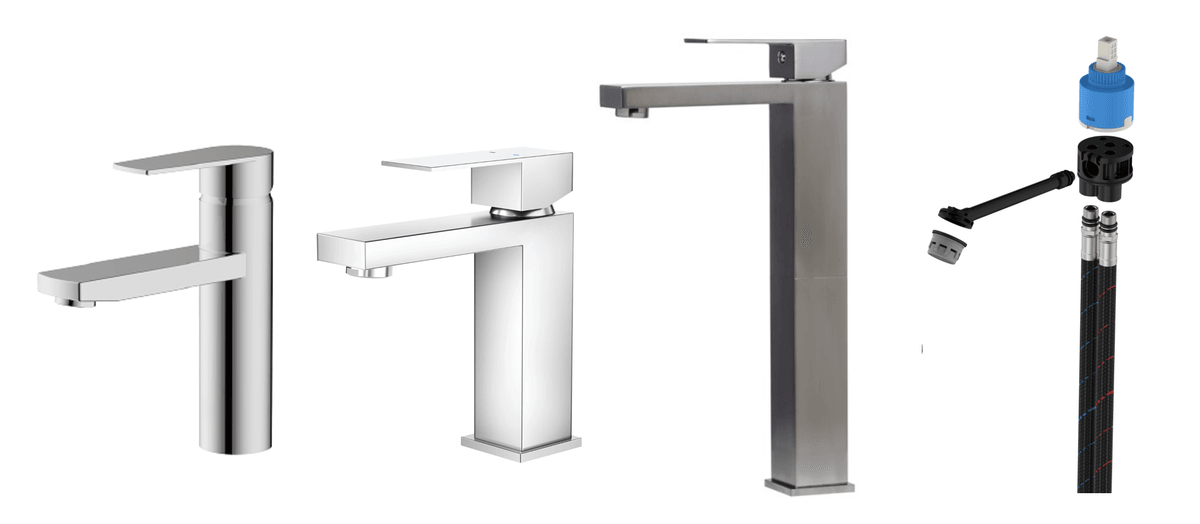
Instead of forcing the decorative outer body to contain high-pressure water, this architecture completely decouples Form from Function:
1. Zero Water Contact on the Outer Shell
The exterior stainless steel body (Shell) acts purely as an aesthetic shield and structural frame. All water flow and hydraulic pressure are fully contained within an independent, engineered inner conduit (Core)—such as food-grade PPO/POM polymer or brass tubing.
Even if an exterior seam undergoes aggressive polishing, it will never leak, because there is zero water pressure acting against the outer shell.
2. Elimination of Stress Fatigue
The inner core absorbs 100% of the water hammer shocks and thermal fluctuations. By isolating the outer welded joints from hydraulic pressure, stress corrosion cracking and structural fatigue are completely eliminated.
3. Superior Lead-Free & Water Safety Compliance
By channeling water through specialized, non-corrosive inner materials, the wetted surface area is minimized and strictly controlled. This makes passing international water safety standards—such as NSF/ANSI 61 and North American Lead-Free regulations—effortless and consistent across production batches.
Conclusion: Engineering Peace of Mind
Cost-optimized single-cavity spouts may seem attractive on paper, but the real-world cost of field failures, warranty claims, and brand damage far outweighs initial savings.
By adopting Core & Shell Isolation, we transform a volatile manual craftsmanship risk into a predictable, robust assembly standard. It allows designers to push the boundaries of sharp, modern hardware design without compromising a single drop of structural integrity.