
Introduction
The global kitchen and bath industry is undergoing a quiet aesthetic revolution. Driven by minimalist European design and stricter global lead-free regulations—such as Europe’s Drinking Water Directive (DWD) and North America’s NSF/ANSI 61—stainless steel has emerged as the darling of premium hardware.
To match the organic, rounded shapes historically dominated by brass casting, modern stainless steel manufacturing has evolved. Walk through any international trade show, and you will see stunning stainless steel faucets with intricate curves and seamless joints.
But as a manufacturer dedicated to lean management and high-end engineering, we must raise a critical question that the showroom floor always ignores:
When we push stainless steel to mimic brass through complex multi-component welding, are we engineering a superior product, or are we engineering a ticking warranty bomb?
The Aesthetic Solution That Created a Mass-Production Nightmare
Unlike brass, which flows easily into complex molds during casting, high-grade stainless steel (like SS304 or SS316L) is notoriously tough and prone to severe work hardening. It resists being bent into "sexy," voluptuous shapes.
To overcome this, the industry adopted a clever workaround: Structural Disassembly.A complex faucet design is split into multiple small, simpler components. Each piece is individually CNC-machined, and then they are laser-welded together. Finally, high-powered polishing wheels grind the exterior weld seams until they are completely invisible to the naked eye.
The result looks like a seamless masterpiece. However, transitioning this process from a "handcrafted prototype" to "consistent mass production" introduces three structural blind spots that can quietly destroy a global brand’s reputation.
Blind Spot 1: The Chemistry Inside the Weld (Oxidation and Chemical Trapping)
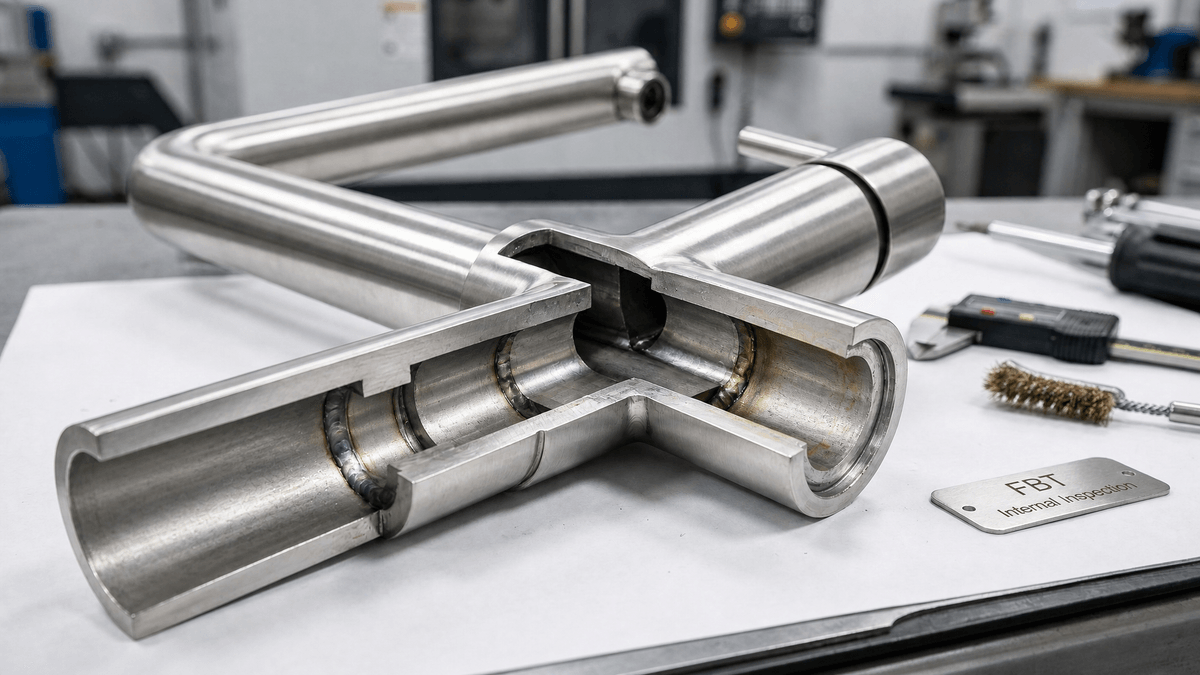
The polishing wheel only covers the outside. Inside the internal waterway, where the water actually flows, the story is entirely different.
- The Shielding Gas Failure: Welding stainless steel requires absolute argon gas shielding, not just on the exterior, but inside the pipe. In high-volume mass production, ensuring 100% stable internal argon flooding in complex, multi-joint geometries is incredibly difficult. Without it, the interior metal burns instantly, creating a rough, black oxide scale.
- The Passivation Trap: After welding, the faucet must undergo acid pickling and passivation to restore its corrosion resistance. However, a multi-piece welded body creates internal dead zones, tight corners, and microscopic gaps. If the acidic solution is trapped in these internal recesses and not neutralized perfectly during high-speed rinsing, it becomes an accelerator for internal corrosion.
The result? Faucets that look pristine on the shelf, but begin to discharge yellowish water or rust internally within months of installation.
Blind Spot 2: Metallurgy and the Threat of Intergranular Corrosion
Stainless steel owes its "stainless" property to a passive chromium oxide layer. However, when steel is subjected to the intense heat of welding (specifically between 500°C and 800°C), it undergoes a phenomenon known as sensitization.
During this thermal cycle, carbon atoms bond with chromium atoms to form chromium carbides along the grain boundaries. This leaves behind a "chromium-depleted zone" right next to the weld seam. When this zone comes into constant contact with municipal tap water—which inevitably contains aggressive chlorine ions—it triggers localized intergranular corrosion.
This explains why even certified SS304 or SS316 faucets can mysteriously develop pinhole leaks or reddish rings, but only precisely along the lines where they were welded.
Blind Spot 3: The Physics of Constant Mechanical Stress
A faucet in a modern kitchen or bathroom is not a static ornament; it is a pressurized vessel subjected to extreme dynamic forces.
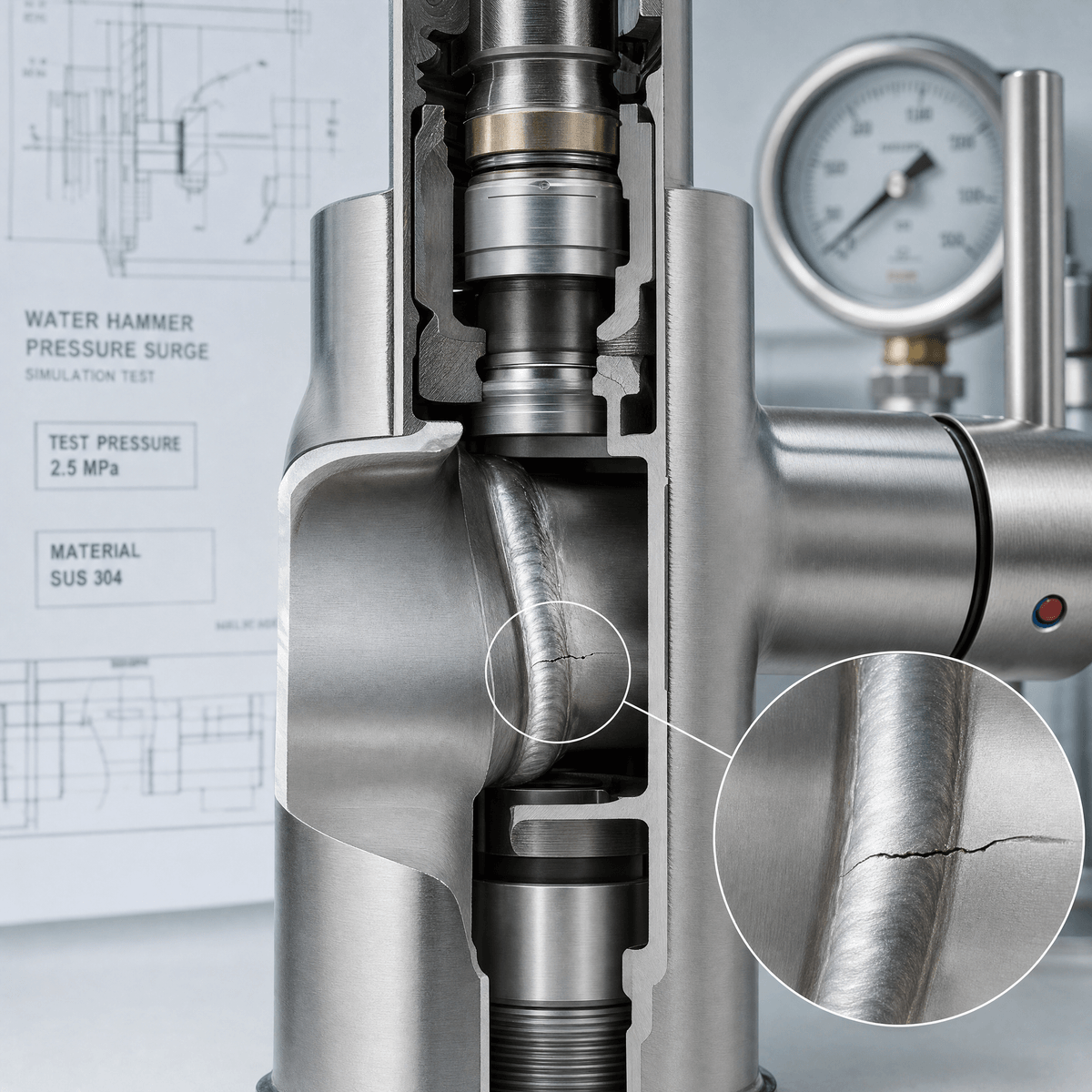
Every time a user shuts off a modern single-lever handle quickly, a pressure shockwave tears through the plumbing. This is known as the Water Hammer Effect.
In a traditional solid-cast or single-tube faucet, this kinetic energy is absorbed evenly by the metal body. However, in a multi-component welded faucet, every internal joint acts as a stress concentration point. If a factory slightly sacrifices weld penetration depth to prevent burning through the aesthetic exterior, micro-gaps are left inside. Over 3 to 5 years of daily water hammer pulses and thermal expansion cycles (switching between hot and cold water), these micro-gaps suffer from metal fatigue, eventually leading to catastrophic structural cracking.
The Economics of Compromise
Beyond engineering failure, there is a fundamental economic truth that buyers must face. CNC-machining multiple components from solid 316 steel requires massive minimum order quantities (MOQs) and inflicts brutal wear and tear on cutting tools. The market price of raw materials is entirely transparent.
If a supplier offers you a complex, beautifully curved "316 stainless steel faucet" at a price that defies the raw commodity market, a compromise has been made. They are either utilizing a cheaper, non-compliant alloy, or they are cutting corners on the vital internal cleaning, shielding, and pressure-testing phases that guarantee long-term survival.
Paradigm Shift: Separate Beauty from Duty
So, how do we deliver the architectural elegance of stainless steel without inheriting the systemic liabilities of internal welding?
At FORBETTER (FBT), our approach is rooted in lean engineering and absolute risk mitigation: We separate the beauty from the duty.
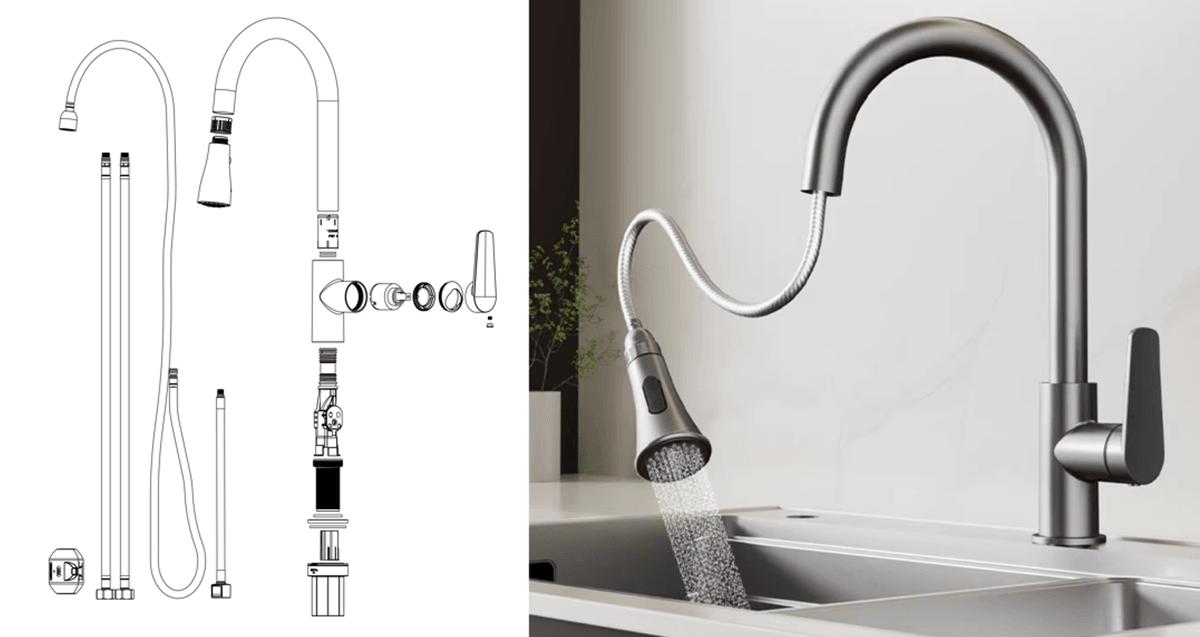
Instead of forcing the structural water-bearing vessel to bend into complex aesthetic shapes, we utilize an Independent Internal Waterway technology.
The Shell (The Beauty): The exterior remains a stunning, architectural-grade stainless steel shell, providing the premium weight, feel, and external corrosion resistance that high-end clients demand.
The Waterway (The Duty): The water path is entirely isolated inside a seamless, high-performance polymer or specialized alloy waterway.
By removing water contact from the external welded structure entirely, we eliminate the risks of internal oxidation, chemical trapping, and intergranular corrosion in one single stroke. Furthermore, it provides 100% lead-free safety that inherently complies with the world’s strictest drinking water directives, while optimizing production costs for our global OEM/ODM partners.
Conclusion
In the premium faucet market, innovation should never come at the expense of reliability. Beautiful aesthetics may win the initial sale, but it is the invisible, internal engineering that protects a brand's warranty margin and reputation over a decade.
As global supply chains become more transparent and regulations tighten, the smartest engineering is often knowing where not to weld.