
Introduction
As the global kitchen and bath market increasingly shifts toward stainless steel for its eco-friendly, lead-free, and sleek design qualities, maintaining consistent quality control has become a top priority. Among all quality benchmarks, the Salt Spray Test (NSS/AASS) is the ultimate litmus test for surface corrosion resistance.
When red rust or pitting appears after testing, the immediate reaction from many product teams is to blame the passivation process itself—demanding longer bath times or higher chemical concentrations. However, in modern precision manufacturing, passivation failure is rarely caused by the passivation bath alone. More often, it is the result of a subtle breakdown somewhere along the line, from raw material handling and degreasing to final drying.
For brand managers, R&D engineers, and QA leads, understanding these root causes is essential for preventing costly field returns and setting realistic engineering specifications. Here is a step-by-step breakdown of where stainless steel surface protection actually succeeds or fails.
1. Pre-Treatment: The Invisible Foundation
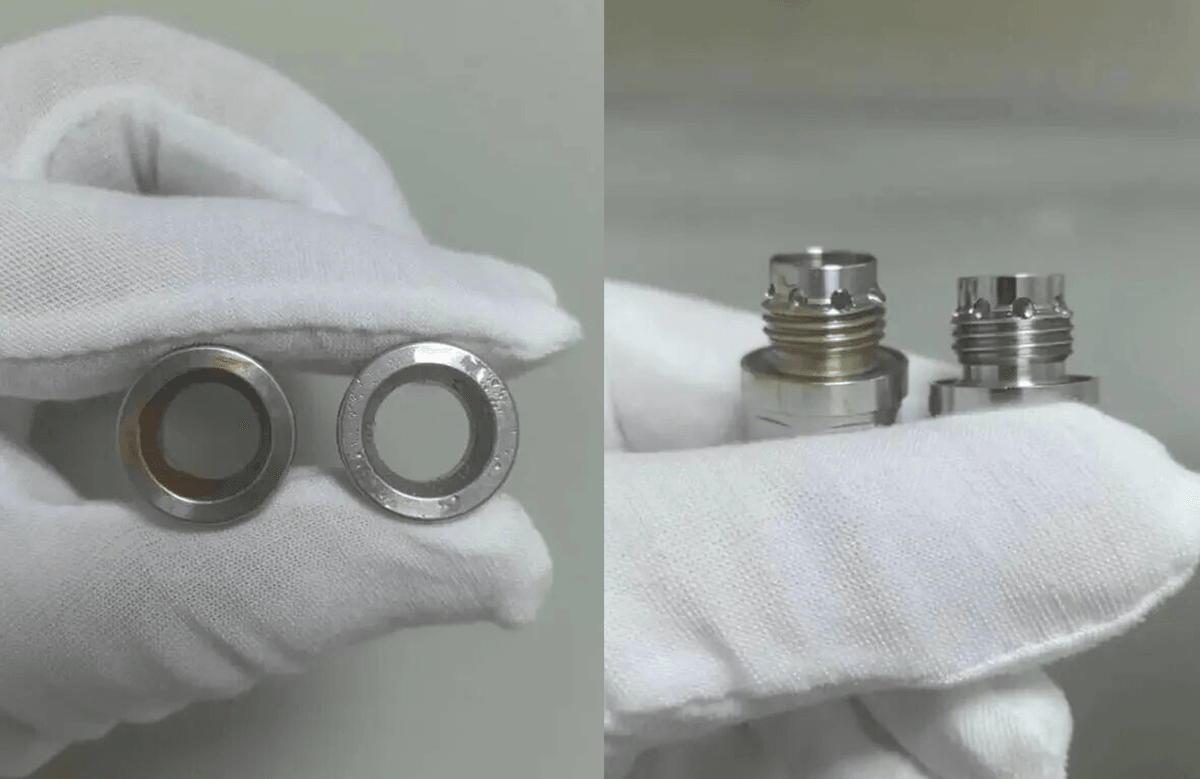
Passivation does not create a protective layer out of thin air; it accelerates the formation of a rich chromium-oxide film on the bare metal surface. If the surface is shielded by cutting oils, free iron contaminants, or heat-tint oxides from welding, the passivation liquid simply cannot contact the steel.
- What goes wrong: Machining lubricants trapped in thread roots, carbon steel tool marks (free iron transfer), uncleaned polishing compounds, or thermal scale around welded joints.
- The QC Check: The Water-Break Test after cleaning. If water beads up or breaks away instead of forming a continuous film, residual oil is still present.
- The Impact: Uncleaned areas remain completely unpassivated, serving as prime initiation points for localized pitting corrosion during salt spray testing.
2. Parameter Control: More Time Is Not Better
A common misconception among non-specialized teams is that "longer bath times equal stronger protection." In chemistry, over-exposure can be just as damaging as under-exposure.
- What goes wrong: Skipping the activation step on welded assemblies; failing to account for low fluid velocity inside narrow faucet spouts or internal waterways; or over-passivating, which can etch the surface and cause micro-cracking in the protective film.
The Takeaway: Passivation is a delicate chemical equilibrium. Under-treating leaves the oxide layer thin and porous, while over-treating destabilizes the surface morphology.
3. Bath Health: The Hidden Culprit of Batch Failures
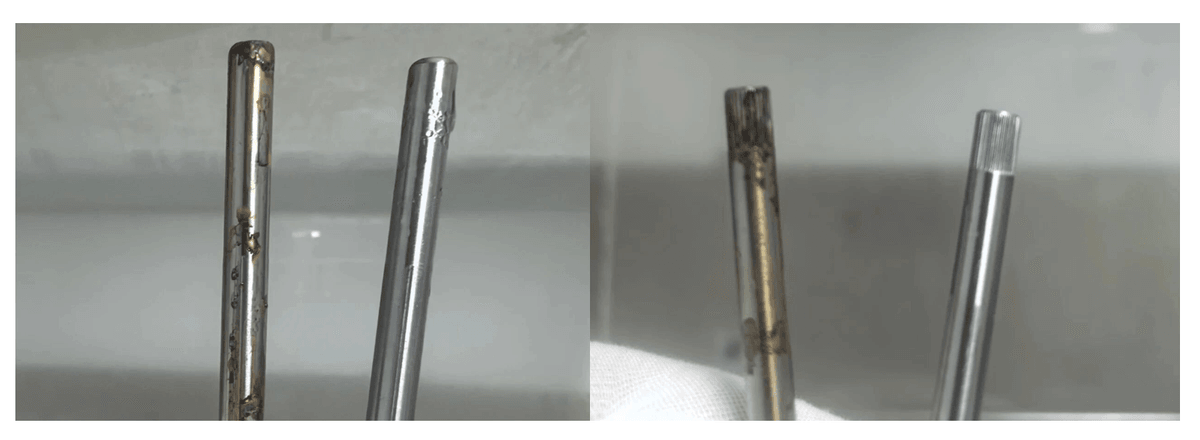
Passivation baths age with usage. The most dangerous contaminant in a stainless steel passivation bath is, iron itself (Fe3+).
- What goes wrong: As hundreds of faucet bodies pass through the line, surface free iron dissolves into the solution. When ferric iron concentration exceeds critical thresholds, iron competes with chromium during oxide formation. Instead of a dense, protective Cr2O3$ layer, the bath produces a loose, iron-contaminated film with drastically reduced corrosion resistance.
- The Impact: Suddenly, an entire batch of faucets loses its corrosion resistance, exhibiting dull surfaces, rainbow discoloration, or premature red rust across the board.
4. Post-Rinse and Drying: The Most Overlooked Failure Point
Even if the passivation step creates a flawless chrome-rich layer, improper post-processing can ruin the result in minutes.
- What goes wrong: Rinsing with tap water instead of deionized (DI) water introduces chlorides (Cl-) and hard water minerals. As the water evaporates during drying, these ions concentrate in crevices and thread roots.
- The Impact: Tests show that finishing with tap water rather than high-purity DI water can reduce a faucet’s salt spray test lifespan by over 50%. White residue builds up, and crevice corrosion triggers rapidly inside the internal threads.
Key Takeaway for Brand Product & Engineering Teams
Corrosion resistance is built through process discipline, not chemical brute force.
When reviewing salt spray failures, increasing chemical concentrations or bath duration should be the last resort. True quality assurance requires evaluating the entire lifecycle of the component:
[ Precision Machining ] → [ Thorough Degreasing ] → [ Acid Activation ]
↓
[ Controlled Drying ] ← [ DI Water Rinse ] ← [ Monitored Passivation ]
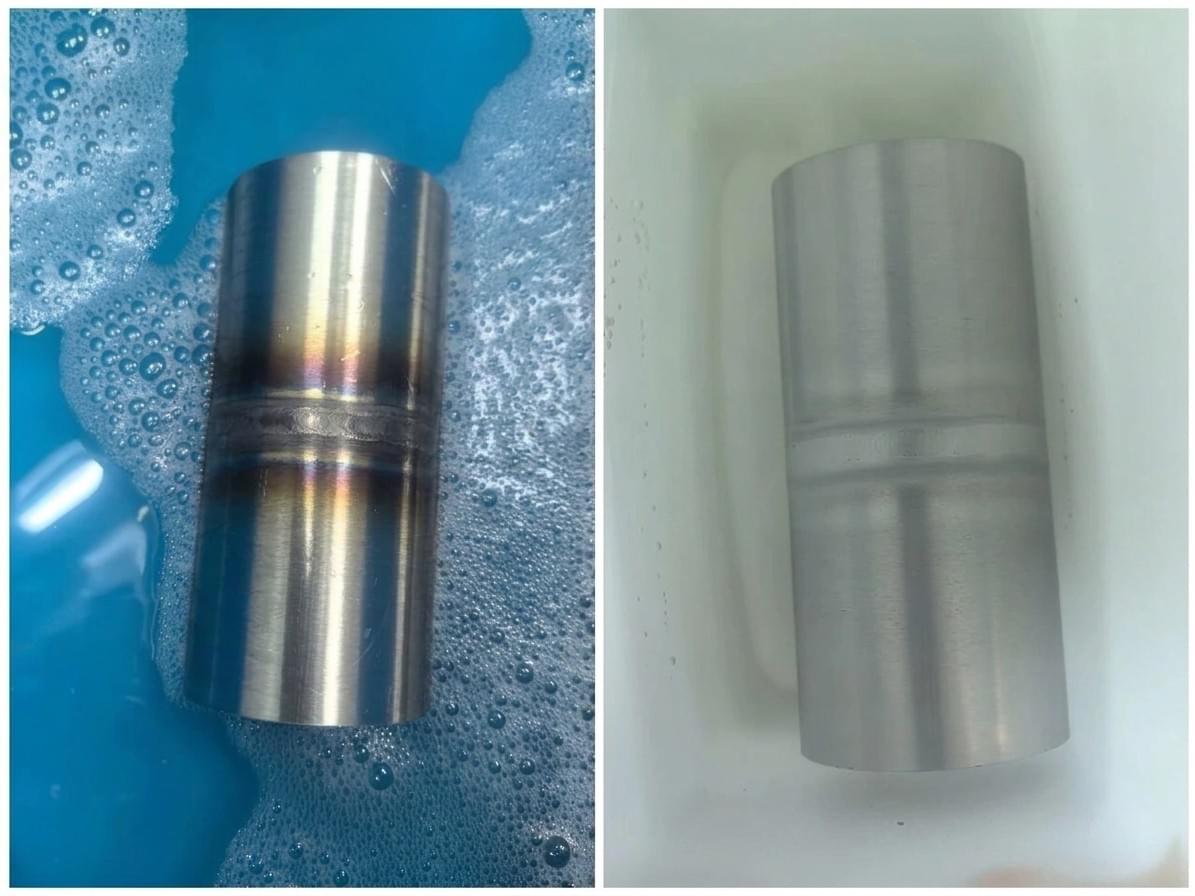
At our manufacturing facilities, we treat surface finish as an integrated system rather than an isolated chemical dip. By aligning raw material selection, automated cleaning lines, DI rinse monitoring, and strict bath chemistry control, we ensure that stainless steel faucets deliver both pristine aesthetics and long-term durability in real-world environments.